1 June 2026 · Twitter Ban Service · ~9 min read
Mass report a Twitter account: what actually works, and what the 'services' won't tell you
Mass reporting a Twitter account means firing many complaints at one X profile to force a suspension — and it rarely works. X (formerly Twitter) acts on whether a rule was genuinely broken, not on how many reports land, and most paid 'mass report' panels quietly file nothing. One evidenced report beats a thousand identical ones.
Does mass reporting a Twitter account actually get it suspended?
Almost never, and the reason is structural. People who set out to mass report a Twitter account expect a hidden threshold of complaints that flips a switch; there isn't one. X reviews a report for a single question — did the account or post actually break a rule? A hundred copy-paste complaints about a rule-abiding profile add up to zero, while one clear report on a genuine violation can trigger action within hours. The scale tells the story: X suspended 464 million accounts for platform manipulation and spam in the first half of 2024 alone, per its Global Transparency Report, and it calls those defences primarily proactive and automated. In plain terms, X's own systems strip out spam and bot networks faster than any report-buying campaign could, so a pile-on adds nothing the machines missed. For the mechanics of a report that does land, we walk through matching an account to the rule it breaks separately.
What are you actually buying when you 'buy mass report Twitter'?
Submission volume from disposable accounts — not enforcement. The typical 'buy mass report Twitter' panel shows you a slick dashboard: a target field, a slider for how many reports to send, a live counter ticking upward. Behind it sits a pool of cheap, aged or freshly-minted profiles that fire the same complaint in a burst. That burst is the exact coordinated pattern X's anti-spam layer is built to spot and discount before a human ever sees it, so the counter climbing to '500 reports sent' measures activity on the seller's side, not pressure on X's. Plenty of panels go further and file nothing at all; the dashboard is theatre. A 'mass report Twitter service' is therefore selling you the feeling of doing something, priced per thousand, while the one variable that actually moves X — a credible report mapped to one of the violations we file — is missing entirely. You can submit that yourself for free.
Got charged for a mass report service that did nothing? Here's your recourse
Then you are the one who got scammed, and you have more leverage than the seller wants you to think. Two angles help. First, paying for influence built on fake accounts now collides with federal rules: the FTC's 2024 final rule bans buying or selling "fake indicators of social media influence, such as followers or views generated by a bot or hijacked account," with civil penalties up to $51,744 per violation for knowing participants — and that is the same bot-and-hijacked-account economy report panels run on. Second, when a service takes your money and delivers nothing, the FTC's own guidance says you can dispute charges for items not delivered as agreed. Open a card chargeback, keep the order screenshots, and treat a Telegram-only seller who vanishes after payment as exactly what they are. Reporting the fraud protects the next buyer too.
Is a 'report Twitter account bot' real, or a risk to your own account?
It is real software, and it is mostly a risk to you. A 'report Twitter account bot' is an automated script or rented panel that logs in and hammers X's report form on a schedule. X's automation rules draw a hard line: outside identified law-enforcement and NGO reporters, using automation to mass-submit reports is off-limits, and accounts tied to spammy automation may face enforcement "including suspension of associated X accounts." So the bot you rent to suspend someone else is the account most likely to be suspended. The free versions are worse — a GitHub 'report bot' that asks for your X password is harvesting a login, not filing complaints. A genuine reporting workflow never needs your credentials, only a public link to the offending post. We pull the tooling apart in our look at why mass-report bots backfire; the short version is that automation is the quickest way to lose your own handle.
How to report a Twitter account the right way (even when it isn't yours)
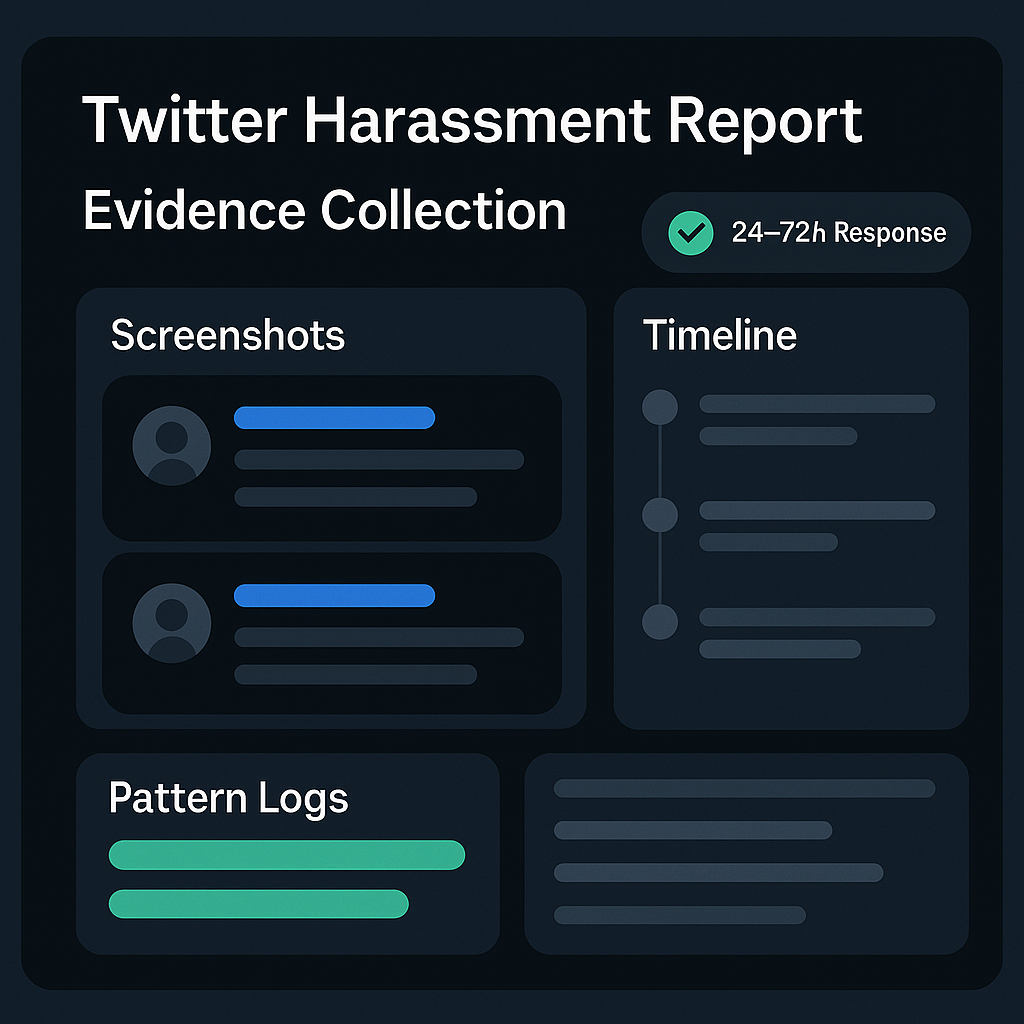
Start from the violation, then pick the channel that fits it. If you are working out how to report a Twitter account from scratch, the in-app route covers most cases: open the offending post or profile, tap the ••• menu, choose Report, and select the reason that genuinely matches. X then lets you attach extra posts for context — the single biggest lever you control, because context is what a reviewer actually weighs. Some categories route to dedicated help-centre forms, and impersonation is the one that matters most: you do not need an X account to file it, so a brand or person targeted from outside can still report. That is also the honest reading of 'how to mass report on Twitter' — not one person multiplying themselves, but several real witnesses each filing an accurate report on the same genuine breach. If the impersonator is squatting a handle you own, reclaiming a dormant username is a separate route.
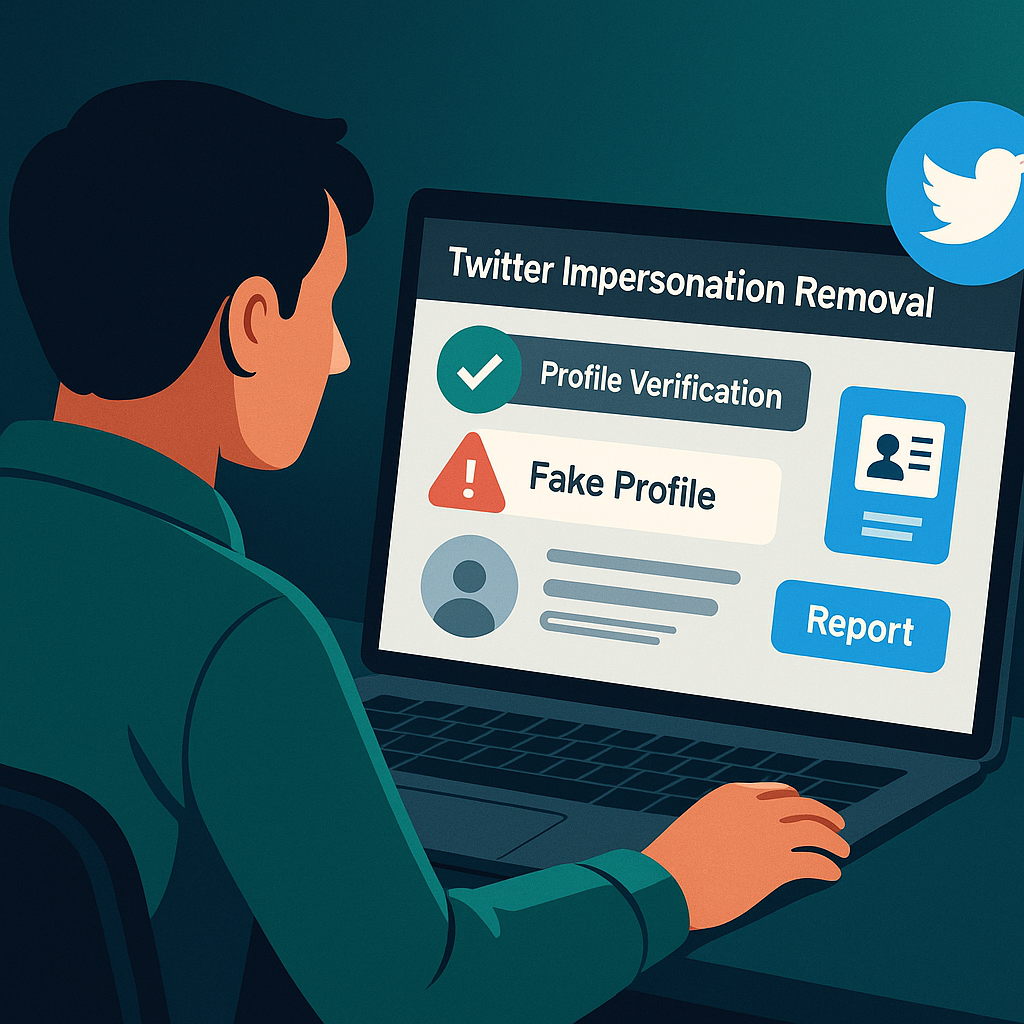
How do you report a bot, fake, or spam account on X?
Report it under platform manipulation, not generic 'spam,' and hand X the pattern. X's platform manipulation and spam policy is written for exactly these accounts: mass-registered or inauthentic profiles, fake followers and engagement, and "coordinated inauthentic activity" where many accounts are run to look like independent, genuine people. When you flag a bot, the evidence that helps is the network signal — near-identical bios, lockstep posting times, a burst of replies pushing one link, a follower list that is mostly empty profiles. A lone bot rarely registers; a documented cluster does. If you searched how to report a bot or spam Twitter account hoping for a one-tap fix, the honest answer is that a short, specific note describing the coordinated behaviour outperforms a bare 'this is spam.' For one obvious bot reply the in-app Report is fine; for a swarm, screenshot the pattern first so the reviewer sees what you see.
How long does X take, and what if it does nothing?
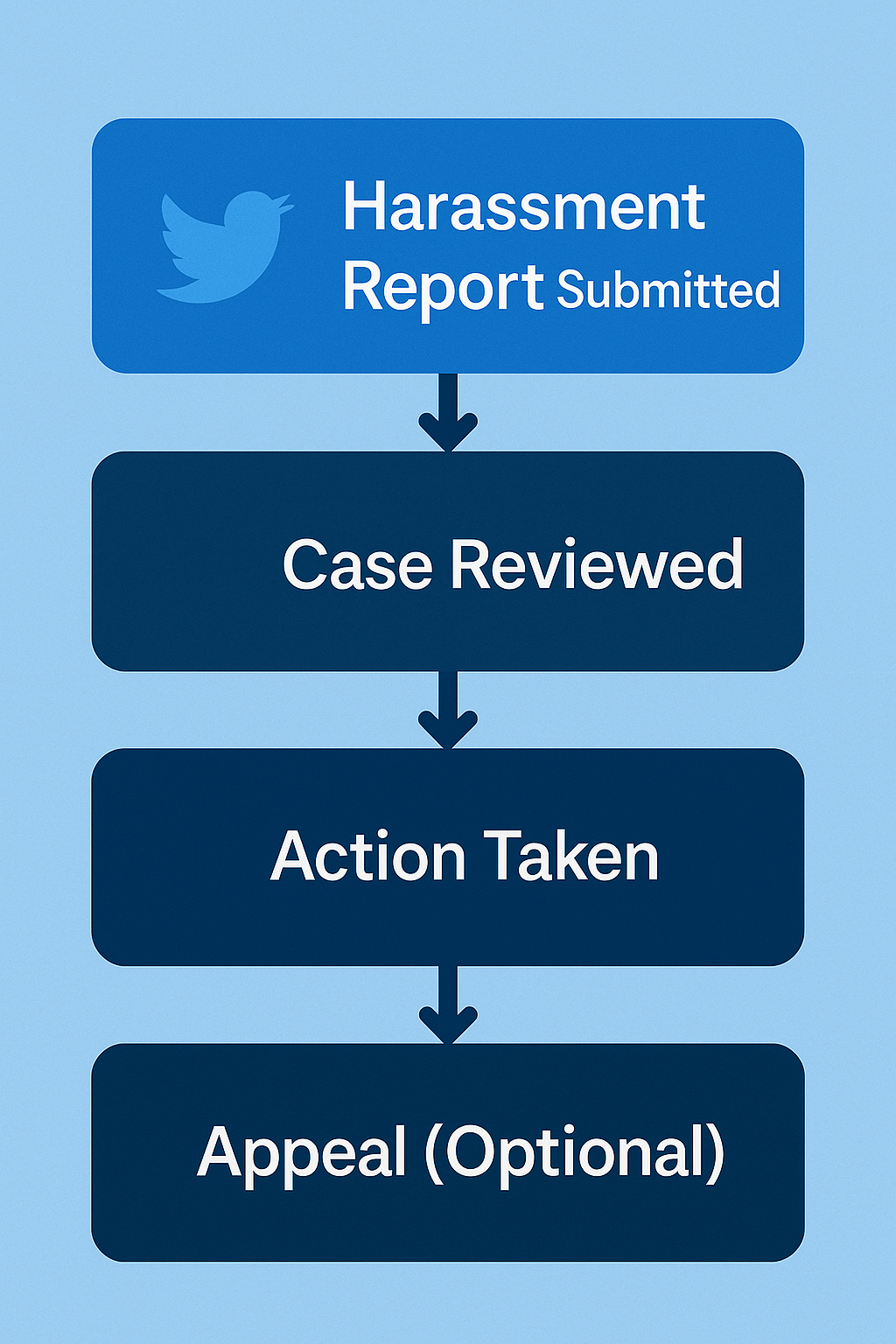
Expect an acknowledgement fast and a decision slowly. X confirms a properly filed report within about 24 hours, then most cases settle in a few days, though it warns resolution can stretch toward 30 when more input is needed or an appeal runs its course. Silence usually means the reviewer found no rule-break in what you sent — not that more reports are required. If a sound case stalls, do three things in order: re-file under the precise category, because a scam logged as 'spam' often dies in the wrong queue; switch to the dedicated form where one exists; and escalate in proportion to the harm. Warn the people a scam is actively targeting, and for credible danger or plainly illegal material, contact local authorities in parallel rather than leaning on a platform takedown alone. Accurate persistence moves cases; resubmitting the same thin report does not.
Volume panel vs evidence-led service vs doing it yourself: which fits?
Match the route to the case, not to the marketing. Most reports you can file yourself in a minute; a paid volume panel is the one option that reliably delivers nothing; and an evidence-led service earns its place only on the hard cases. The honest comparison:
| Route | What you actually get | Cost | Use when |
|---|---|---|---|
| Volume 'mass report' panel | Bursts of discounted reports X discards as coordinated — sometimes nothing at all | Per 1,000 reports, often lost to fraud | Nothing; skip it |
| Reporting it yourself | One accurate, rule-mapped report a reviewer can act on | Free | A clear single violation you can document |
| Evidence-led reporting service | Each behaviour matched to the right X policy, documented and filed through official channels | Per case, defined scope | Rings of fakes, relaunching scams, a wrongly-closed report |
That last column is the entire job of a legitimate X account reporting service — it never promises a guaranteed ban or moves against an account that broke no rule, because coordinated false reporting is itself a violation and tends to backfire on the people who organise it. If your case is a genuine X Rules breach and you would rather hand off the documentation, send us the handle and the rule it breaks. For anything involving immediate danger, contact the authorities at the same time.
Sources
- X Global Transparency Report (H1 2024) — platform-manipulation suspensions
- X Help Center — Platform manipulation and spam policy
- X Help Center — Automation development rules
- X Help Center — Report a post, list, or Direct Message
- X Help Center — Report impersonation (no account required)
- FTC (2024) — Final rule banning fake reviews and testimonials
- FTC Consumer Advice — Disputing charges for things you never got
FAQ
How many reports does it take to suspend a Twitter account?
No fixed number exists. X weighs whether a rule was actually broken, so a handful of honest reports on a real violation beats ten thousand hollow ones — and a rule-abiding account survives any pile-on, however large.
Can you mass report a Twitter account with a group of friends?
If each person genuinely witnessed the same rule-break and files an accurate report, that is normal moderation traffic. Coordinating the group to fire identical or exaggerated complaints is the part X treats as reporting abuse and discounts.
Are paid mass report services and report bots safe to use?
No. Automated reporting breaches X's automation rules and can get the account you use suspended, and many paid panels simply pocket the fee and file nothing. A real reporting workflow only needs a public link to the offending post, never your password.
Will the person know if I report their Twitter account?
No. X does not reveal who filed a report, and the account only hears anything once X decides to act. The single exception is a copyright (DMCA) claim, where your details are shared with the other party.
Can you report a Twitter account without having an account?
For impersonation, yes — X's dedicated impersonation form lets a targeted person or brand report without logging in. Most other categories use the in-app flow, which needs you to be signed in to an X account.