26 May 2026 · Twitter Ban Service · ~9 min read
How to get someone banned from Twitter, the legitimate way
You cannot get someone banned from Twitter just because you want to. X (formerly Twitter) only removes accounts that break the X Rules, no matter how many people pile on. The honest how-to is narrow but real: pin the account to the exact rule it breaks, gather proof, and report it through the right official channel.
Can you really get someone banned from Twitter, or is that wishful thinking?
Not by yourself. Only X can suspend an account, and it does so when something on that account is confirmed to break a rule — not because a crowd wants it gone. People search for how to get someone banned on Twitter expecting a hidden button or a paid panel; neither is real. The same hope sits behind "how to get someone banned on Twitter for no reason," and that one has a blunt answer: you can't, because with no violation there is nothing for a reviewer to act on. What you genuinely control is the quality of the case you hand over. Treat a report as evidence submitted to a moderator, not a vote cast against a person you dislike, and the rest of this guide gets a lot more useful.
What actually gets an account suspended on X?
Named, provable violations do. X publishes the X Rules, and an account is actioned when its behaviour maps cleanly to one of them. The categories enforced most reliably are concrete, and severity sets the ceiling — the worst breaches, such as credible threats or child safety, are actioned fastest and hardest. The scale of this only works because review keys on validity, not on vote-counting: X says it suspended 335 million accounts for platform manipulation and spam in the second half of 2024 alone, per its Global Transparency Report. No system counting complaints could sort that volume; a rule-based review can.
- Financial scams — crypto "giveaway" cons, fake support handles, and links that drain wallets, under X's financial-scam policy.
- Impersonation — an account wearing your name, face, or logo to fool people.
- Harassment and threats — a sustained campaign, doxxing, or violent messages aimed at one person.
- Fake engagement and spam — coordinated bot accounts, reply-spam, and inauthentic amplification.
Which violation should you actually report it as?
Picking the wrong category is the quietest way to kill a valid report. X routes complaints by the reason you select, so a scam filed under "I just don't like this" may never reach the queue that would act on it. Match what you are seeing to the category X reviews it under, and reach for the dedicated form when one exists. The map below covers the cases that come up most.
| What you're seeing | Report it as | Where to file it |
|---|---|---|
| A fake giveaway, "investment," or wallet-connect link | Scam / financial fraud | In-app Report on the post, citing the financial-scam policy |
| An account using your name, photo, or brand | Impersonation | The dedicated impersonation form — no X account required |
| Repeated insults, threats, or your private info posted | Abuse / threats / doxxing | In-app Report; private information has its own option |
| A swarm of identical replies or obvious bots | Platform manipulation & spam | In-app Report on a post or the profile |
| A suspended user back under a new handle | Ban evasion | In-app Report, linking the original suspended account |
Impersonation has the strictest route of all: X generally acts on a complaint from the impersonated person or their authorised representative, and you can file it even without an X account. That precision is also the difference between the categories our service reports and a complaint that quietly expires.
How do you report a Twitter account, step by step?
Once the category is clear, filing takes under a minute. You can begin from the offending post or from the profile, and you can flag a single tweet or assemble a case from several. This is the path that leaves a reviewer the least guesswork:
- From the post or the profile, open the ••• menu and pick Report.
- Choose the reason you settled on a moment ago, and resist rounding it to whatever label sits closest.
- If X asks for more — extra posts, a short description — give it; several linked examples beat one isolated grab.
- Send it, then keep an eye on your in-app notifications for the receipt and any outcome.
X walks through the mechanics on its report-a-post guide. One underused point: if you are a bystander flagging a scam or an impersonation aimed at someone else, you can still file — X does not require you to be the target for most safety categories.
What evidence does X need to actually act?
A report is only as strong as what backs it, and reviewers move quickly rather than chase context. The aim is a file someone can confirm at a glance. For an X case, capture:
- The permalink to each offending post — tap the timestamp — not just the profile URL, because posts get deleted.
- A screenshot that shows the handle, the content, and the date together in one frame.
- The account's @handle and numeric user ID where you can find it, since it survives a display-name change.
- For impersonation, proof you are the real party: ID, an official site, or the matching brand asset.
- For a scam, the payment or wallet request and any off-platform link.
Save your copies before you submit, because a violator often deletes once attention lands. Solid documentation is also what lets a lawyer or a service step in later without rebuilding the case from scratch.
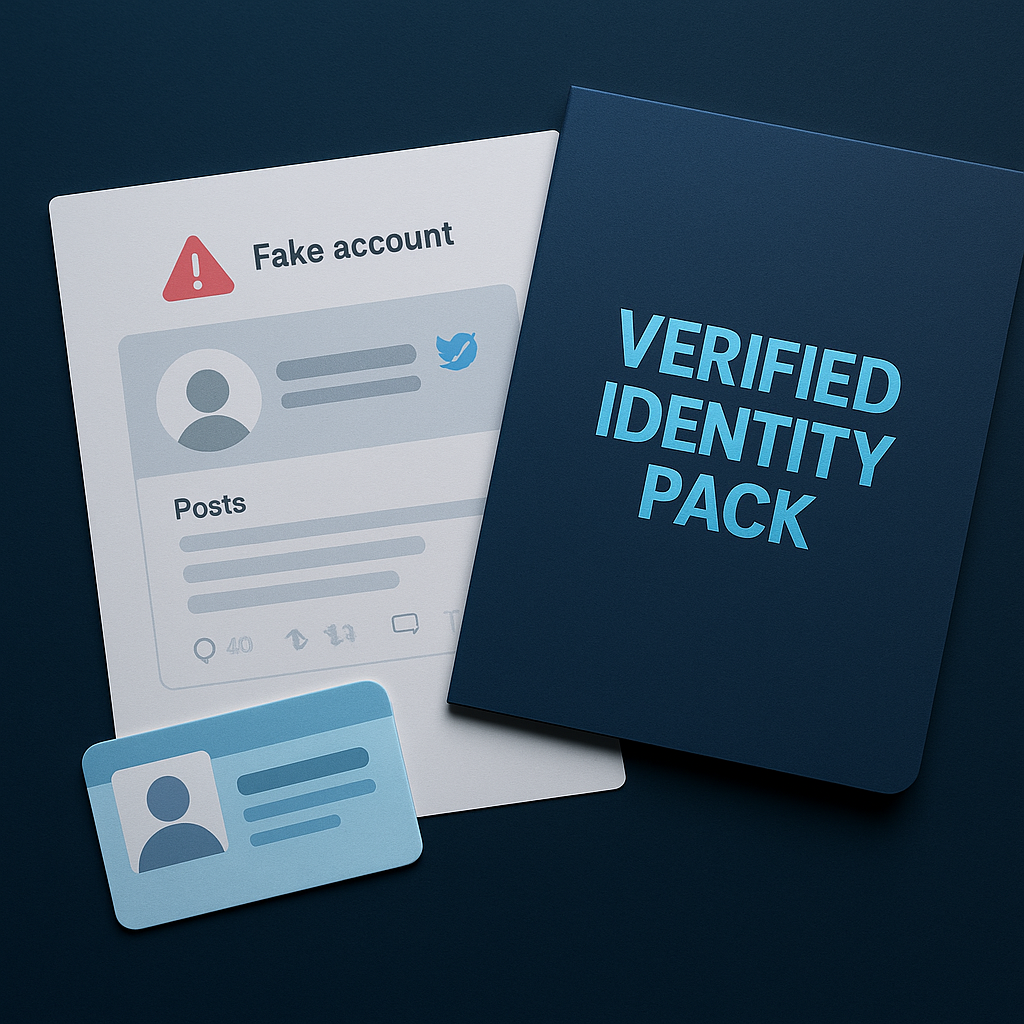
How long does it take X to suspend an account after a report?
There is no fixed clock, but the shape is predictable. The instant you submit, X sends an in-app confirmation that the report is in the queue. Review then ranges from minutes, for an obvious and severe breach, to several days when a human judgement call is needed. If X acts, a second notification names the outcome — a label, a temporary lock, a removed post, or a full suspension — and a removed tweet is usually replaced by a notice that it broke the rules. If you hear nothing back, that silence is itself a verdict: the reviewer did not find a rule-break in what you sent. Severity drives the pace far more than anything you do; a credible threat travels a different lane from a borderline insult.
What can you do if X takes no action?
A report closed with no action is frustrating, but it is rarely the end. First, re-check the category — a scam filed as "spam," or an impersonation filed as "abuse," is the most common reason a sound case stalls — then re-file under the precise reason with cleaner proof. Second, switch to the dedicated form for the cases that have one: impersonation, privacy and doxxing, and counterfeit each have a standalone report that reaches a specialist queue rather than the general flow. Third, escalate in proportion to the harm. For an active financial scam, warn the people being targeted; for credible danger or plainly illegal material, contact local law enforcement in parallel instead of leaning on a platform takedown alone. X also documents how it weighs cases in its range of enforcement options. Accurate persistence works; repeating the same thin report does not.
Can you get banned for mass reporting or using a "ban bot"?
Yes, and it is usually the person running the campaign who gets burned, not the target. Coordinated false reporting breaks X's Misuse of Reporting Features policy, which bars "submitting duplicate or false reports in large numbers," and X's systems are built to recognise and discount a pile-on. A rented "mass report bot" or a bought report panel does nothing to a rule-abiding account except put your own at risk. We pull that apart fully in our look at whether a mass report bot can force a suspension; the short version is that volume was never the signal X listens to. Report the genuine breach once, properly, and stop there.
When is it worth handing the case to a reporting service?
Most reports you can file yourself in a minute. It is worth bringing in help when the case turns awkward: a ring of fake or impersonation profiles, a scam that keeps relaunching under fresh handles, or a valid report X wrongly closed that you need to escalate cleanly. A service earns its place on the unglamorous parts — documenting the breach, choosing the correct channel, filing impersonation paperwork, and tracking the appeal window — never by promising a guaranteed ban or moving against an account that broke no rule. That boundary is the entire job. If you would rather hand it over, our X account reporting service reviews every case first; you can browse the violations we take on or tell us the handle and the rule it breaks. For anything involving immediate danger, contact the authorities as well.
Sources
- The X Rules — X Help Center
- How to report a post — X Help Center
- Our range of enforcement options — X Help Center
- Misuse of Reporting Features policy — X Help Center
- Report impersonation accounts — X Help Center
- X Global Transparency Report (H2 2024 figures)
FAQ
How many reports does it take to get someone banned on Twitter?
There is no set number. X reviews whether content breaks a rule, so one accurate report on a real violation outranks thousands of empty ones. Report volume is not a counter that fills up; a single well-evidenced case is what moves a reviewer to act.
Can you get someone's Twitter account banned with a single report?
Yes, if the violation is clear and serious. The honest route to how to get someone's Twitter account banned is proof, not numbers: one documented impersonation, scam, or credible threat can trigger a suspension, while a vague complaint about a rule-abiding account does nothing.
Will the person know that I reported them?
No. X does not tell the reported account who flagged it; reports stay anonymous. The one carve-out is a copyright claim under the DMCA, where the counter-party can see who filed. Treat any app that promises to reveal who reported you as a phishing scam.
Can you get permanently banned from Twitter for one tweet?
Yes, for the most serious categories. Most breaches climb a ladder of warnings, locks, and post removals first, but a single tweet carrying a credible violent threat, terrorist content, or a child-safety violation can bring an immediate permanent suspension on the first strike.
Is there a faster way to get someones Twitter banned?
No shortcut beats a clean report. Searches like how to get someone's Twitter banned, or how to get someones Twitter banned typed without the apostrophe, all resolve to the same thing: name the rule, attach proof, file it correctly. Speed comes from clarity and severity, never from a bot or a bought panel.